*** This entire blog is AI-Generated (Google Gemini). ***
As a graphic design teacher, I often see students—and even seasoned designers—fixate on the content itself: the perfect font pairing, the trending color palette, the flawlessly executed illustration. They strive to make their work beautiful, unique, and technically superb. While this dedication to craft is crucial, it’s only half the story.
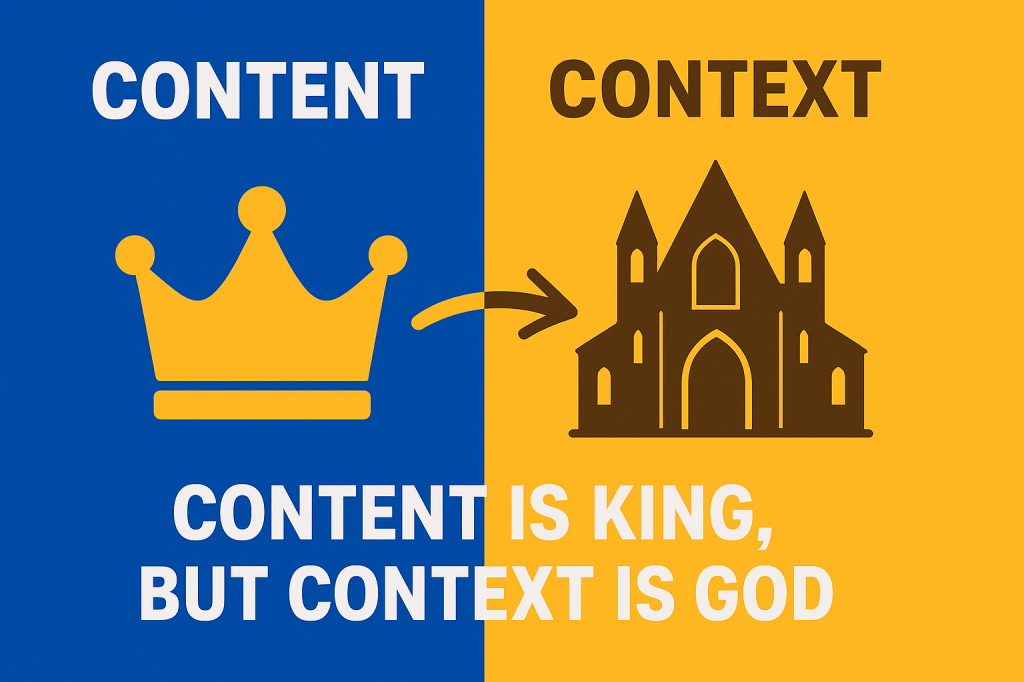
Gary Vaynerchuk’s philosophy, “Content is king, but context is God,” is the essential missing piece for modern graphic design education. In our classroom, we need to shift the mindset from simply creating a great visual asset to creating a great contextual experience.
The Content Trap
Content is the what—the logo, the poster, the website layout. It’s the tangible deliverable. But designing without context is like giving an amazing speech in an empty room. The content is brilliant, but the surrounding circumstances—the platform, the audience’s mindset, the time of day, and their previous experiences—determine its actual impact.
For a graphic designer, understanding context means asking:
- Who is the audience, and what do they want right now? Are they casually scrolling on Instagram, or are they actively searching for information on a desktop? (The psychology of the platform.)
- How does this design fit into their life? Is it an interruption, or is it a natural, value-added part of their experience? (The experience design.)
- What is the final medium? A high-resolution print ad demands a different design approach than a tiny, compressed GIF on a banner. (The technical execution.)
Elevating Content to Contextual Brilliance
Context is what makes a design effective, not just attractive. A billboard with a paragraph of text, while technically perfect, fails because the viewing context is a driver passing by at 60 mph. Conversely, an intentionally low-fidelity, user-generated-style video ad might be wildly successful on TikTok because it respects that platform’s context and audience psychology.
As educators, we must push students past the technical skills and into this strategic way of thinking. Teach them to reverse-engineer their design process by starting with the “God” (Context) before they build the “King” (Content).
Every design brief must start with a deep dive into the environment and the consumer journey. By respecting the platform, the audience, and the experience they are interrupting (or enhancing), our students can create designs that don’t just exist—they resonate and perform. When content and context align, the design becomes less about personal artistry and more about powerful, strategic communication. That is the ultimate measure of success for a graphic designer in the digital age.
 A. Ragnauth: Expanding the Frame
Leave a comment