When we first look at a photograph, our attention usually goes directly to the main subject. We notice the person, place, or event happening in front of us, but the longer we look the more we notice the smaller details. A person’s hands, their clothes, an item in the foreground, their expression, or even the environment surrounding them can completely change the way we understand an image.
Visual storytelling has existed long before photography. People used images and symbols to communicate ideas and experiences (Ayiter). Photography continues that tradition by capturing a single moment that suggests a much larger story. Looking back at my own photography, I noticed how often these stories are built through details that could easily be overlooked.
Photograph: CapturedbyAngg, 2026.
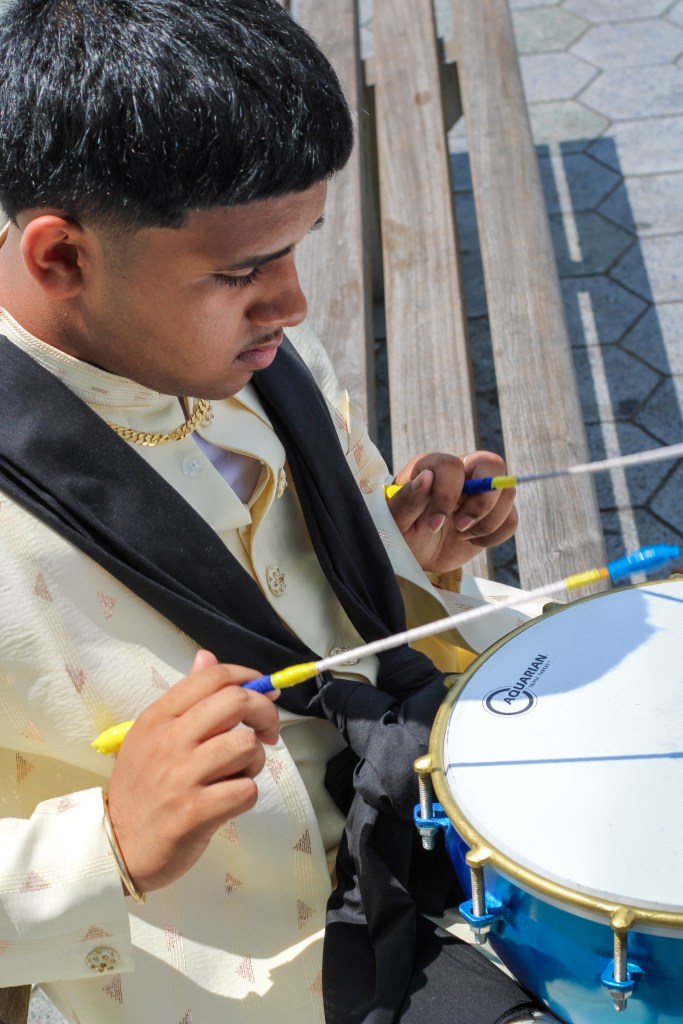
What I like about this photograph is that you almost feel like you caught him in the middle of something. He isn’t looking at the camera or posing, his attention is completely on the tassa drum. The way he holds the sticks, clothing, and the drum itself all start filling in the story. We can’t see the crowd or even much of the environment, but we don’t necessarily need to. There is enough happening inside the frame to imagine the music and energy continuing beyond it.
Photograph: CapturedbyAngg, 2026.
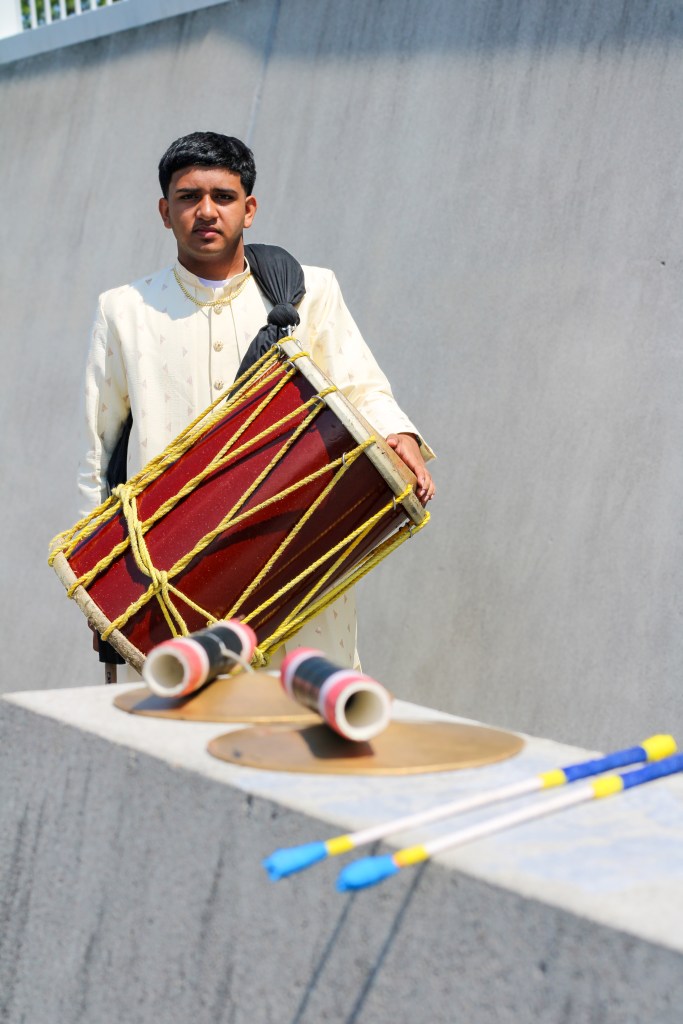
This photograph gives us a little more information on the shoot. The bass drum is as noticeable as the subject and the instruments sitting in the foreground weren’t something I wanted to crop out. They were placed intentionally. They actually help tell us what this moment is connected to. The setup provides the story behind my subject, a musician. This relates to Bergström’s discussion of visual storytelling because what surrounds a subject can be just as important as the subject itself. Without those instruments or his traditional clothing, we’d be looking at a completely different portrait.
Photograph: CapturedbyAngg, 2026.
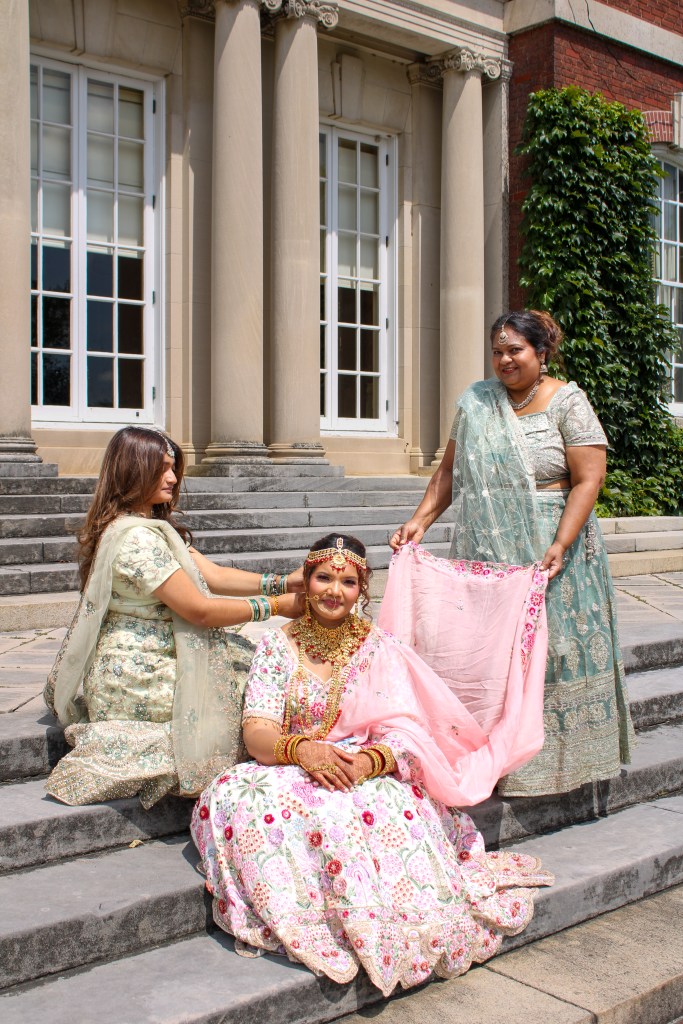
I think this photograph becomes more interesting when you stop looking only at the bride. The two women helping her are what really make the moment feel alive. Her sister is adjusting something near her hair while her mom fixes her outfit. Those small yet intentional gestures say a lot about the care and preparation happening around her. Then you start noticing her jewelry, henna, clothing, and the setting. Suddenly, it isn’t just a bridal shoot anymore. It feels like we walked into the middle of a moment that started before I pressed the shutter and continued right after.
Photograph: CapturedbyAngg, 2026.
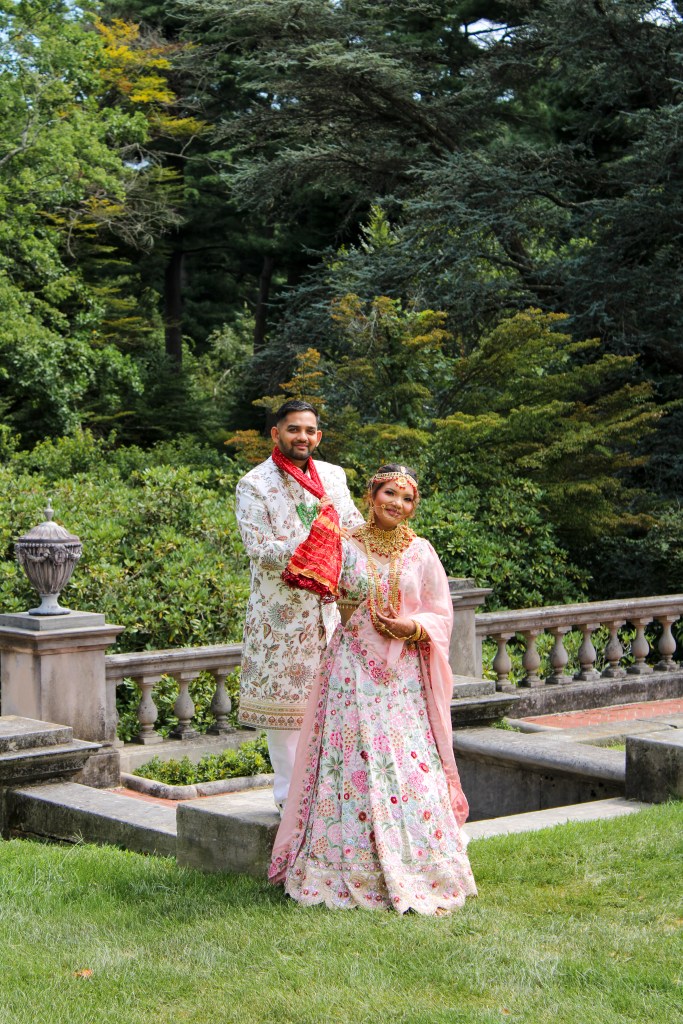
What stands out to me in this photograph isn’t only the setting, but the interaction between them. They’re both smiling, and the way she holds his scarf out in front of them adds a playful sense of movement instead of a formal pose. It makes the moment feel more natural and gives us a glimpse of their relationship rather than just showing us what they look like together. Their coordinated clothing connects them visually, while the stone architecture and greenery add to the elegance of the scene. It’s a posed photograph, but their expressions and that small gesture with the scarf make it feel much more personal.
Photograph: CapturedbyAngg, 2026.
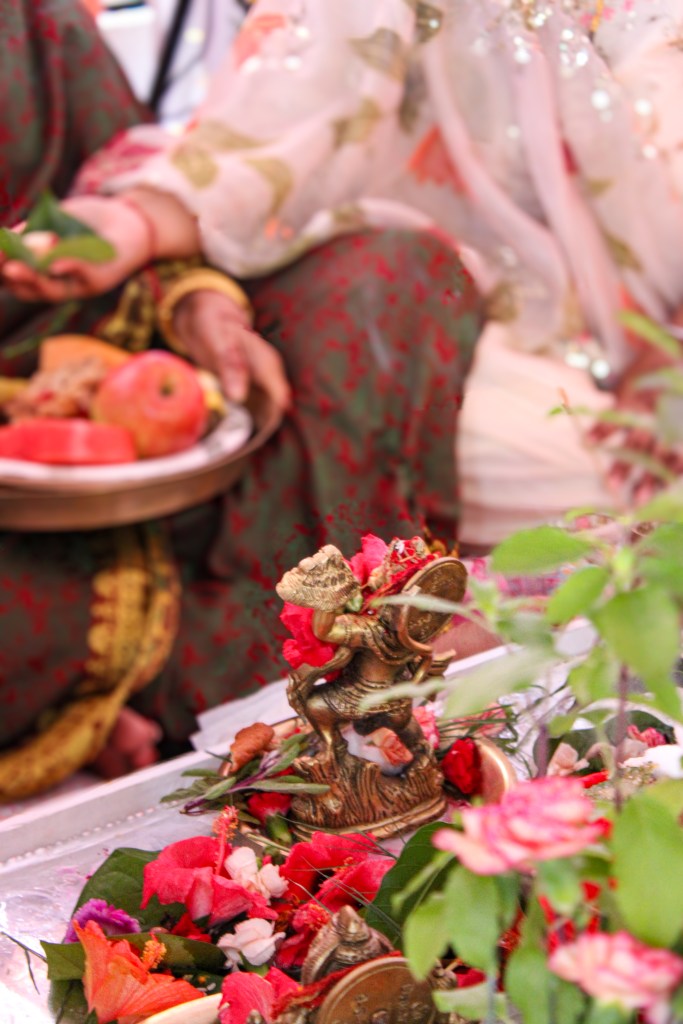
This is probably one of my favorite examples of a story being told without someone’s face at the center of it. Your attention goes straight toward the Hanuman murti, but then there is so much more to notice: the flowers, leaves, offerings, clothing, and hands surrounding it. Even if someone looking at the photograph doesn’t know every part of the pooja, they can still understand that what they’re seeing has meaning. The environment surrounding Hanuman becomes part of the story itself.
Photograph: CapturedbyAngg, 2026.
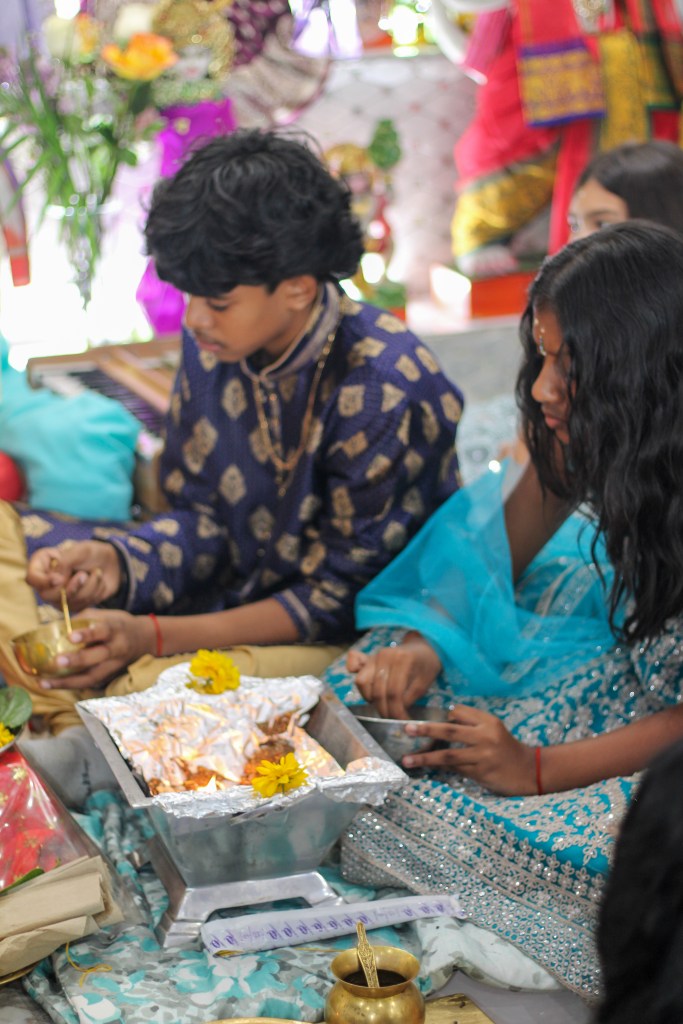
This photograph feels different because nobody is posing for my camera. Everyone’s attention is somewhere else, on the fire, the ceremony, and what they’re doing in that moment. That’s what I like about it. The flowers, clothing, movement, and fire make the frame feel busy, but it is the kind of busy that makes you want to keep looking. Each detail gives you another clue about what’s happening and makes the photograph feel like a real moment rather than something setup for a picture.
Photograph: CapturedbyAngg, 2026.
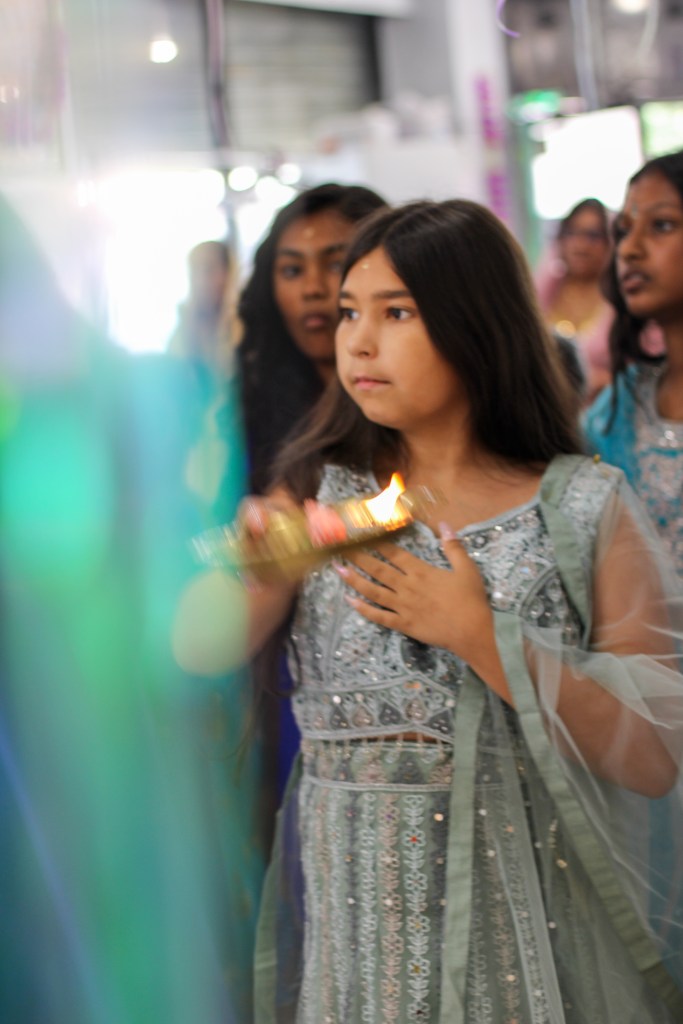
This photograph shows how something really small can become the emotional center of an image. The flame grabs your attention first, but then you notice her expression and the hand resting against her chest. The people behind her are blurred, but I like that you can still tell they’re there. She gets her own quiet moment within the photowhile still being apart of something much larger.
Looking Beyond A Subject
Looking back at these photographs made me realize that the biggest moment isn’t always the one that tells the best story. Sometimes it’s someone’s hands fixing a bride’s clothing, the instruments placed near a musician, flowers surrounding a murti, or a small flame being held during prayer. They’re easy details to overlook, but they’re often the things that make an image feel real. I’m not only deciding who or what goes in front of my camera, but I’m deciding what gets to stay in the frame.
References:
ALL PHOTOGRAPHS BELONG TO CAPTUREDBYANGG (Angelie Ragnauth)
Ayiter, Elif. The History of Visual Communication.
Bergström, Bo. Essentials of Visual Communication.


Leave a Reply